

Sustainability · 2025
In this section54 topics
- Sustainability Policy & Goals — Overview1 item
- Sustainability Policy2 items
- Sustainability Goals & UN SDGs3 items
- Policy Review3 items
- Business Value Chain1 item
- Stakeholder Analysis2 items
- Environmental Policy & Guidelines3 items
- Environmental Policy Review3 items
- Energy — Plan & Guidelines4 items
- Energy — Electricity Consumption1 item
- Energy — Fuel Consumption1 item
- Energy — Targets2 items
- Energy — Performance & Outcomes2 items
- Water — Plan & Guidelines4 items
- Water — Withdrawal, Discharge & Consumption1 item
- Water — Targets2 items
- Water — Performance & Outcomes2 items
- Waste — Plan & Guidelines4 items
- Waste — Generation, Disposal & Recycling1 item
- Waste — Targets2 items
- Waste — Performance & Outcomes2 items
- GHG — Plan & Guidelines4 items
- GHG — Emissions1 item
- GHG — Emissions Verification2 items
- GHG — Principles & Standards1 item
- GHG — Targets1 item
- GHG Targets — Carbon Neutrality1 item
- GHG Targets — Other Targets1 item
- GHG — Performance & Outcomes2 items
- Environmental Legal Incidents1 item
- Social Policy & Guidelines5 items
- Social Policy Review3 items
- Social — Principles & Standards Practised1 item
- Human Rights Due Diligence1 item
- Employees — Plan & Guidelines4 items
- Employees — Workforce2 items
- Employees — Remuneration & Provident Fund1 item
- Employees — Training & Development1 item
- Employees — Occupational Health & Safety1 item
- Employees — Labour Relations1 item
- Employees — Employee Representation3 items
- Employees — Targets2 items
- Employees — Performance & Outcomes2 items
- Customer Management — Overview1 item
- Customers — Plan & Guidelines4 items
- Customers — Satisfaction Results1 item
- Customers — Targets2 items
- Customers — Performance & Outcomes2 items
- Community & Social — Overview1 item
- Community & Social — Plan & Guidelines4 items
- Community & Social — Targets2 items
- Community & Social — Performance & Outcomes2 items
- Other Social Management1 item
- Law Violation Incidents1 item
Sustainability Policy & Goals — Overview
Introduction
The company markets, produces, and distributes consumer goods ( Consumer Products) for household product groups, personal care product groups, and baby product groups, focusing on developing products that can effectively meet consumer needs at all times. Additionally, the company selects natural and environmentally friendly ingredients to ensure consumers' confidence in cleanliness and safety. The company recognizes the importance of fostering business growth alongside its responsibility towards the environment and society as a whole.
To be a part of driving the United Nations' Sustainable Development Goals (SDGs) and the Bio-Circular-Green Economy (BCG Model), which has been declared a national agenda. Furthermore, the company recognizes the importance of human rights issues in its business operations. The company prioritizes stakeholders throughout the value chain who may be affected by its business activities. Therefore, to ensure comprehensive sustainability across environmental, social, and governance (ESG) dimensions.
Sustainability Policy
Has a Sustainability Policy
Yes
Policy Description
The Company prioritizes developing and driving its business towards sustainability to ensure its long-term growth. To this end, it has established sustainability management policies in various areas to provide a concrete operational framework, categorized as follows:
Environmental Development: Committed to conducting environmentally friendly business operations and considering environmental impacts. Promotes awareness among executives and employees regarding environmentally friendly and climate-conscious business operations, and collaborates with local and international organizations on resource management and environmental care.
Social Development: Committed to building stability for society and communities, developing employees' skills and potential to create quality individuals for society, and generating employment, careers, and community income distribution to foster a sustainable society. Supports and respects the protection of human rights, treats employees equally and fairly, provides welfare, safety, and hygiene in the workplace, promotes local employment, and collaborates with communities, schools, or government agencies in various activities to foster participation and enhance the livability of the community environment.
Good Corporate Governance: Committed to managing the business in accordance with good corporate governance principles to develop the company and expand its business for sustainable growth. Develops and implements various policies for transparent and ethical business operations, considering the benefits to the business and shareholders, and engaging with stakeholders through company policies such as good corporate governance policies, business ethics principles, anti-corruption policies, and insider trading prevention policies, among others.
Sustainability Goals & UN SDGs
Has Sustainability Goals
Yes
Goals Description
In addition to its sustainability strategy, the company has set short-term and long-term goals to drive continuous sustainable outcomes. These goals can be categorized into environmental, social, and governance dimensions as follows:
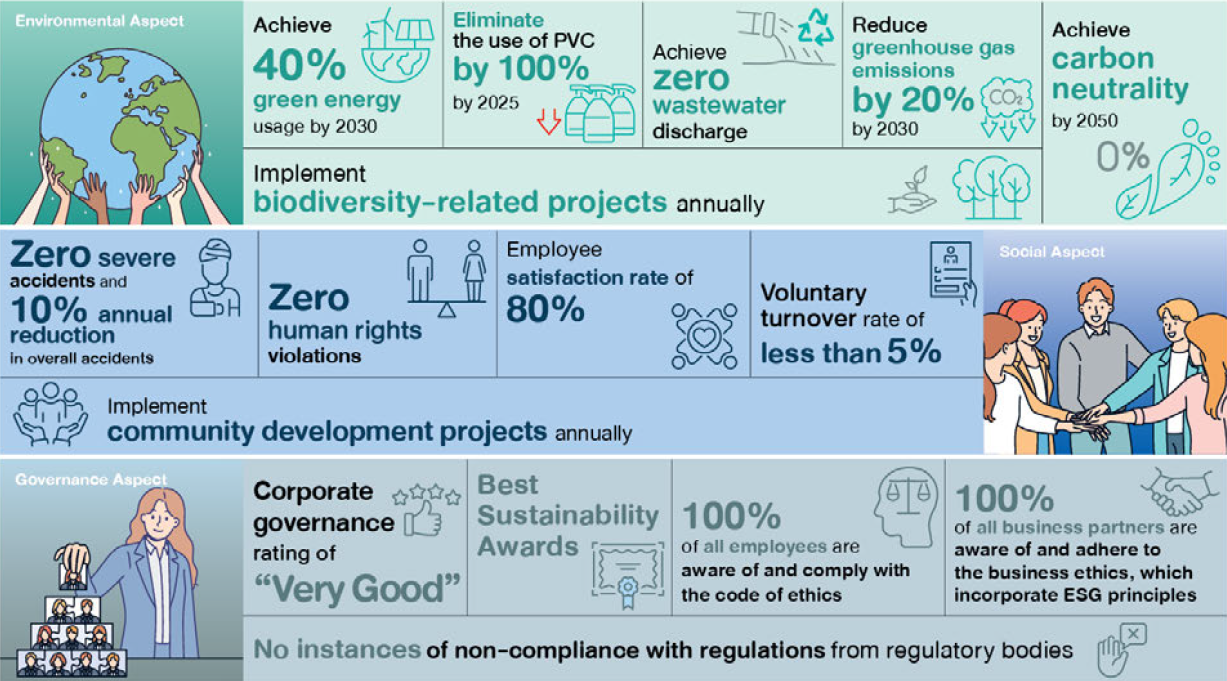
In the year 2025, the company has set organizational sustainability goals and operational results, with details as follows:
Sustainability Goals | Operational Guidelines | Operational results for the year 2025 | Supporting goals SDGs |
Environmental Aspect (Environment) | |||
Clean energy utilization 40% of total energy consumption by 2030 | Increasing the number of rooftops Solar Roof Top, converting solar energy into electricity and thermal energy for the production process | The company has installed a rooftop solar power generation system (Solar Rooftop) with a total installed capacity of 2.8 megawatts to support the use of clean energy and reduce greenhouse gas emissions from electricity consumption in the production process. |
|
Proportion of recycled materials used ( Recycled content) |
| The company uses Post Consumer Resin to replace virgin plastic, totaling 296 Tons in 2025 |
|
Zero waste discharge into nature |
|
|
|
Reducing greenhouse gas emissions 20% by 2030 and achieve carbon neutrality by 2050 | The company conducts an assessment of its organizational greenhouse gas emissions (Carbon Footprint for Organization: CFO) in accordance with the guidelines of the Thailand Greenhouse Gas Management Organization (Public Organization) and ISO 14064-1 standard, covering all three scopes of greenhouse gas emissions (Scope 1, Scope 2, and Scope 3) since 2023. | The company has reduced greenhouse gas emissions across Scope 1, 2, and 3 by 19.7% compared to 2023[1] |
|
Annual environmental development projects | Developing environmental development projects |
|
|
Social and Community Aspect (Social) | |||
Ensuring workplace safety and reducing severe accidents | Compliance with safety, occupational health, and environmental management standards in the workplace |
|
|
Human rights violations | Handling human rights complaints and ensuring equal operational standards | No complaints found |
|
Employee satisfaction is at 80 percent | Treating employees equally, continuous personnel retention and development, and fostering engagement activities between employees and the company | Employee satisfaction score is 93 percent |
|
Voluntary turnover rate less than 5 percent | Retaining employees, who are crucial personnel for the company, at a higher rate than the industry average | The company's voluntary turnover rate is 4.09% (industry average is 15.3%) |
|
Annual community development projects | Organizing activities to support community operations and assist society in various aspects |
|
|
Governance Aspect (Governance) | |||
Good Corporate Governance | Complaints or practices that do not comply with good corporate governance principles | No cases found |
|
Non-compliance with regulations from regulatory bodies | Complaints or practices that do not comply with relevant laws or regulations | No cases found |
|
All employees acknowledge and adhere to the Code of Ethics | All employees acknowledge and adhere to the Code of Conduct | 100 percent |
|
All business partners acknowledge the business code of conduct that integrates ESG principles |
| 100 percent |
|
[1] Greenhouse gas emission data for 2025 is preliminary, covering Q1-Q4 of 2025, collected and assessed according to the guidelines of the Thailand Greenhouse Gas Management Organization (Public Organization) and ISO 14064-1 standard. This data is currently undergoing verification and may be subject to revision upon completion of the process.
UN Sustainable Development Goals
| SDG Goal |
|---|
| Goal 3 Good Health and Well-being |
| Goal 4 Quality Education |
| Goal 5 Gender Equality |
| Goal 6 Clean Water and Sanitation |
| Goal 7 Affordable and Clean Energy |
| Goal 8 Decent Work and Economic Growth |
| Goal 9 Industry, Innovation and Infrastructure |
| Goal 10 Reduce Inequalities |
| Goal 11 Sustainable Cities and Communities |
| Goal 12 Responsible Consumption and Production |
| Goal 13 Climate Action |
| Goal 14 Life below Water |
| Goal 15 Life on Land |
| Goal 16 Peace, Justice and Strong Institutions |
| Goal 17 Partnerships for the Goals |
Policy Review
Policy Reviewed This Year
Yes
Policy Changed This Year
Yes
Review Details
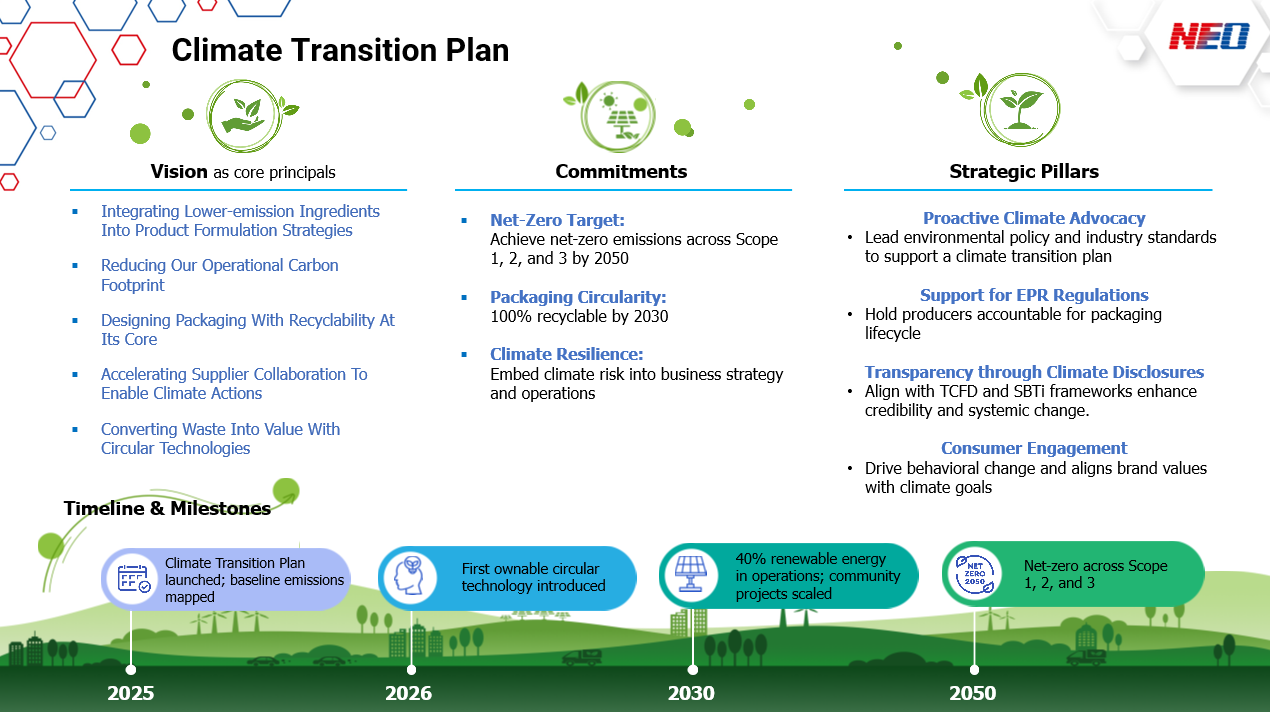
Over the past year, the company has reviewed and developed its sustainability policies and goals by establishing a “Climate Transition Plan” to systematically define the direction for transitioning to a low-carbon economy. This plan covers the reduction of greenhouse gas emissions throughout the value chain, the design of products and packaging based on circular economy principles, the integration of climate-related risks into business strategies and operations, as well as strengthening collaboration with partners and stakeholders.
The plan sets a long-term goal of achieving net-zero greenhouse gas emissions, covering Scopes 1, 2, and 3 by 2050, along with mid-term targets for renewable energy consumption, the development of 100% reusable packaging by 2030, enhancing transparency in climate-related data disclosure according to international frameworks, and promoting the organization's role in driving policies and consumer engagement to support a sustainable long-term climate transition.
Business Value Chain
Value Chain Description
The analysis of various activities and the management of stakeholders’ expectations throughout the business value chain enable the Company to analyze risks and opportunities in business operations, which are key factors in the Company’s operations and sustainable business development. The Company’s business value chain comprises primary activities and supporting activities that enable the primary activities to achieve their objectives, as follows:
Primary Activities
Activities related to raw material preparation, commencing from research and product development through to the procurement of quality raw materials and packaging that have been tested in accordance with the Company’s standards from both domestic and international suppliers, including continuous quality review systems.
Activities related to production, from raw material preparation, mixing and transformation of raw materials and resources, preparation of packaging, and product filling into products that are ready for sale with quality.
Activities related to product distribution, warehouse management, and delivery of products to customers through key partners both domestically and internationally.
Activities related to marketing communication, sales promotion, and integrated communication of information to consumers to directly reach target groups according to product groups.
Activities related to after-sales services, handling of complaints from partners through the sales team and from consumers, in order to ensure consumer satisfaction after purchasing the Company’s products and to bring about continuous development and improvement.
Supporting Activities
Activities relating to production planning, maintenance of machinery and utilities systems to support the production process in managing costs efficiently.
Activities relating to information systems to support work processes efficiently in order to reduce management costs, including data storage, data backup, and data analysis leading to continuous improvement of work processes.
Activities relating to human resources, from recruitment processes to performance evaluation, aiming to create personnel with shared NEO DNA.
Activities relating to accounting and finance to oversee the Company’s financial performance and financial position to ensure stability and strength to support future growth.
Stakeholder Analysis
Introduction
The Company assesses the linkage of its business operations with stakeholders in the business value chain and analyzes the expectations of such stakeholders at least once per year in order to develop appropriate responses to the expectations of each stakeholder group and reduce risks arising from potential disputes. In addition, this creates opportunities for the Company to further expand its business to meet stakeholders’ expectations and conduct business sustainably.
Stakeholder Analysis
| Stakeholder Type | Stakeholders | Stakeholder Expectations | Response to Expectations | Communication Activities |
|---|---|---|---|---|
| External stakeholders | 2913 · Description: Shareholders | • Sustainable growth and consistent returns
• Transparency, completeness, and accuracy of information
• Good corporate governance
• Continuous strong performance
• Accurate, complete, and timely disclosure of information | • Develop strategic business plans and effectively communicate and build confidence with shareholders.
• Enhance internal control systems and manage risks efficiently.
• Ensure transparent information disclosure through various channels, such as shareholders’ meetings, annual reports, company website, etc.
• Create sustainable long-term returns.
• Conduct business in accordance with corporate governance principles, with transparency and efficiency | 2938 · Description: Visit · 2939 · Description: Press Release · 2941 · Description: Online Communication · 2943 · Description: External Meeting · 2944 · Description: Annual General Meeting (AGM) · 2947 · Description: Satisfaction Survey · 2949 · Other name: Communication Channels: (1) Telephone: +66 (0)2-017-8900 #3429 (2) E-mail: ir@neo-corporate.com and (3) Company website: https://investor.neo-corporate.com · Description: Others |
| Internal stakeholders | 2921 · Description: Employees | • Stability
• Equal treatment
• Employee development
• Appropriate compensation, benefits, and welfare
• Positive work environment
• Career advancement and growth opportunities | • Fair compensation management
• Opportunities for career advancement
• Continuous learning and skill development for employees
• Creation of a positive and safe work environment
• Organization of recreational activities
• Effective complaint reporting and management | 2941 · Description: Online Communication · 2942 · Description: Internal Meeting · 2945 · Description: Complaint Reception · 2946 · Description: Employee Engagement Survey |
| External stakeholders | 2915 · Description: Consumers · 2923 · Description: Customers | • High-quality, safe products that meet all standards
• Excellent pre- and post-sales service
• On-time product delivery
• Fair pricing and promotional offers
• Protection of customer confidential information
| • Continuous product and service development process
• Rigorous quality control at every stage of production until delivery to customers
• Appropriate pricing strategy
• Customer site visits and comprehensive after-sales service
• Actively listening to customer feedback and efficiently addressing complaints
| 2941 · Description: Online Communication · 2945 · Description: Complaint Reception · 2947 · Description: Satisfaction Survey · 2949 · Other name: Communication Channels: (1) Telephone: +66 (0)2-017-8900 (2) Company website (3) Social media, such as Facebook / Line (4) E-mail: customerservices@neo-corporate.com · Description: Others |
| External stakeholders | 2899 · Description: Suppliers | • Transparent and fair procurement practices, with auditability
• Continuous increase in order volume
• Creating added value and fostering sustainable partnerships
• Timely payment for goods and services
• Adherence to contracts, agreements, and terms and conditions
| • Fair treatment of partners and ethical business conduct with transparency
• Development of skills and capabilities of partners
• Selection of partners with high standards
• Conducting business with strong corporate governance
• Ensuring stability of raw material supply in collaboration with partners
• Fair and appropriate contractual agreements
• Timely payments with efficient, rapid, and reliable payment systems
| 2941 · Description: Online Communication · 2943 · Description: External Meeting · 2949 · Other name: Code of Conduct for Business Partners · Description: Others · 2949 · Other name: Communication Channels: (1) Company website (2) Telephone: +66 (0)2-017-8900 (3) Social media, such as Facebook / Line (4) E-mail: procurement@neo-corporate.com · Description: Others |
| External stakeholders | 2925 · Description: Financial institution | • Timely debt repayment
• Compliance with loan agreement terms and conditions | • Timely debt repayment and adherence to terms and conditions
• Maintaining financial ratios in line with financial institution standards conditions
• Prompt and accurate response to credit analyst inquiries | 2941 · Description: Online Communication · 2949 · Other name: Communication Channels: (1) Telephone: +66 (0)2-017-8900 (2) Company website: www.neo-corporate.com · Description: Others |
| External stakeholders | 2902 · Description: Community · 2928 · Description: Society | • Health, safety, and occupational health responsibility
• Managing environmental impacts in the community, addressing issues such as waste, production by-products, and air pollution
• Community economic development
• Support for community development activities
• Support for activities, problem-solving, and community and social development | • Strict compliance with environmental laws
• Preservation of the external environment and surrounding areas
• Controlling and reducing environmental impact from business operations
• Supporting and engaging with the community, such as vocational training initiatives
• Field visits for community needs assessment, listening to complaints and suggestions | 2938 · Description: Visit · 2940 · Description: Social Event · 2941 · Description: Online Communication · 2945 · Description: Complaint Reception · 2949 · Other name: Communication Channels: (1) Telephone: +66 (0)2-017-8900 (2) Company website: www.neo-corporate.com · Description: Others |
| External stakeholders | 2929 · Description: Media | • Provision of factual information and updates | • Transparent disclosure of information and news for public verification | 2938 · Description: Visit · 2939 · Description: Press Release · 2941 · Description: Online Communication · 2943 · Description: External Meeting · 2949 · Other name: Communication Channels: (1) Telephone: +66 (0)2-017-8900 (2) Company website: www.neo-corporate.com · Description: Others |
| External stakeholders | 2931 · Description: Government agencies and Regulators | • Compliance with laws, regulations, and guidelines
• Participation in promotional programs, such as public commerce initiatives
| • Full compliance with relevant laws and regulations
• Collaboration with government activities and initiatives | 2938 · Description: Visit · 2941 · Description: Online Communication · 2949 · Other name: Communication Channels: (1) Telephone: +66 (0)2-017-8900 (2) Company website: www.neo-corporate.com · Description: Others |
Environmental Policy & Guidelines
Has an Environmental Policy
Yes
Policy Description
Environmental Policy and Management
The Company is committed to conducting its business in a sustainable manner based on environmental responsibility. The Company recognizes the importance of preventing and minimizing environmental impacts arising from its operations across the entire value chain, from product research and development, raw material sourcing, manufacturing, and product distribution. These efforts aim to continuously reduce potential environmental impacts.
Environmental policy therefore represents a fundamental principle guiding the Company toward sustainable business operations. Accordingly, the Company has established the following environmental policies:
Control and manage waste generated from the Company’s activities in a systematic and efficient manner under the 3Rs principle: Reduce, Reuse, and Recycle.
Comply with applicable environmental laws and regulations relevant to the Company’s operations in order to prevent and minimize environmental impacts while striving to achieve the environmental targets set by the Company.
Communicate the environmental policy to employees throughout the organization and encourage all employees to participate in environmental governance and management.
In addition, to support the Company’s environmental policy, key environmental practices have been integrated into the Company’s business operations. These include the adoption of internationally recognized environmental management systems and participation in environmental assessments and certifications, including the following:
ISO 14001 Certification (Environmental Management System)
The Company recognizes the importance of sustainable environmental management and has adopted internationally recognized principles to strengthen its environmental management practices. These practices aim to improve environmental performance within the organization and promote long-term environmental sustainability.
The Company has established an environmental management working team responsible for overseeing environmental issues, formulating environmental policies, reviewing and evaluating policy effectiveness, and ensuring compliance with applicable environmental laws and regulations. Environmental targets have been established, environmental initiatives are continuously implemented, and effective communication with stakeholders is maintained.
As a result, the Company received ISO 14001 Environmental Management System certification on 15 August 2025, and the system continues to be implemented and maintained.
Green Industry Certification from the Department of Industrial Works
The Company manages environmental performance systematically in accordance with the Green Industry framework, covering manufacturing processes, energy and resource utilization, waste management, pollution control, and compliance with environmental regulations. The Company also extends its environmental initiatives to suppliers, communities, and relevant stakeholders through collaborative partnerships known as the Green Network.
Through these efforts, the Company was awarded Green Industry Level 5 (GI5 – Green Network) certification by the Department of Industrial Works on 25 November 2025. This recognition reflects the Company’s commitment to implementing environmental impact reduction measures throughout the value chain, sharing environmental management knowledge with suppliers and communities, and continuously monitoring and evaluating collaborative environmental initiatives.
The Company also regularly reviews and improves its environmental management system to ensure alignment with the Green Industry framework and long-term sustainable business practices.
Verification of Organizational Carbon Footprint (CFO) by TGO and ISO 14064-1
The Company recognizes the growing importance of environmental challenges, particularly climate change, which increasingly affects economies, ecosystems, biodiversity, and disaster risks.
To contribute to addressing this issue, the Company conducts an Organizational Carbon Footprint (CFO) assessment, which has been verified by the Thailand Greenhouse Gas Management Organization (TGO) and aligned with the ISO 14064-1 standard. This process enables the Company to identify significant sources of greenhouse gas emissions and establish appropriate emission reduction plans.
The Company also collaborates with external organizations to explore suitable carbon offset approaches that can generate environmental benefits while also supporting local communities.
Environmental Guidelines
| Guideline |
|---|
| Electricity Management |
| Fuel Management |
| Renewable/Clean Energy Management |
| Water Management |
| Waste Management |
| Greenhouse Gas and Climate Change Management |
| Air Quality Management |
| Noise Pollution Management |
Environmental Policy Review
Policy Reviewed This Year
Yes
Review Details
Key Changes in Environmental Policies, Practices, and Targets During the Year
During the past year, the Company reviewed and strengthened its environmental management framework in a systematic manner to align with evolving sustainability-related risks and opportunities, as well as national and international sustainable development directions. The key changes are summarized as follows:
1. Upgrading the Policy from “Environment” to “Environment and Climate Change”
The Company revised its existing environmental policy to explicitly incorporate climate change considerations. The policy establishes a framework for energy management and greenhouse gas emission reduction in alignment with national development pathways, including the Nationally Determined Contributions (NDC) and the transition toward a low-carbon economy. Climate-related considerations have also been integrated into the Company’s decision-making, investment planning, and business operations across the value chain.
2. Expanding Environmental Practices Across the Value Chain
Previously focused primarily on internal operations, the revised policy expands its scope to include suppliers and business partners. Clear environmental practices for suppliers have been established, covering resource efficiency, waste management, circular economy practices, and responsible sourcing in order to elevate environmental standards across the entire supply chain.
3. Establishing Concrete Practices for Resource and Waste Management
The revised policy places greater emphasis on clearly defined operational approaches in key areas, including:
Enhancing energy efficiency and increasing the use of clean energy
Managing water and wastewater under the Zero Discharge concept and closed-loop systems
Managing waste based on the 3Rs principle (Reduce, Reuse, Recycle)
Reducing the use of virgin plastic and promoting the development of environmentally friendly packaging
In addition, the Company has introduced a Biodiversity Commitment Policy for the first time to reflect its awareness of the risks and impacts associated with biodiversity loss that may arise from business operations. The policy emphasizes:
Responsible sourcing of raw materials
Zero deforestation and ecosystem protection
Minimizing impacts on ecosystems within operational areas and the supply chain
Furthermore, the policy review clarifies the roles and responsibilities of executives, working teams, and employees at all levels, and establishes a process for regular policy review and continuous improvement to ensure alignment with applicable laws, relevant standards, and stakeholder expectations.
Policies & Guidelines Changed
| Change |
|---|
| Electricity Management |
| Renewable/Clean Energy Management |
| Water Management |
| Biodiversity Management |
| Greenhouse Gas and Climate Change Management |
Energy — Plan & Guidelines
Has an Energy Management Plan
Yes
Plan Description
Objectives and Targets
The Company recognizes the importance of energy efficiency and the continuous reduction of energy consumption in its production processes. An annual energy conservation plan has been established to improve energy efficiency and reduce energy consumption per unit of production through the systematic implementation of energy conservation initiatives.
The Company is also committed to increasing the share of green energy consumption to at least 40% by 2030. Key initiatives include the installation of solar rooftop systems at manufacturing facilities to support the transition to clean energy and reduce long-term environmental impacts.
Management Approach
The Company has adopted the Energy Management System (EnMS) as a key mechanism to enhance energy performance and promote sustainable energy management across the organization. The EnMS framework follows the Plan–Do–Check–Act (PDCA) approach, enabling the Company to establish energy policies, set energy objectives and targets, monitor performance, and continuously improve energy management practices.
The EnMS framework has been integrated into the operations of the Company’s controlled manufacturing facilities in accordance with Thailand’s Energy Conservation Promotion Act, under the supervision of the Department of Alternative Energy Development and Efficiency (DEDE). Annual energy reports have been prepared since 2018 and are verified by external auditors prior to submission to the relevant authorities.
The Company’s energy management initiatives focus on improving energy efficiency across key production and utility systems, including compressed air system optimization and production building temperature control improvements, to reduce energy consumption and enhance operational efficiency.
In 2025, the Company further expanded its renewable energy initiatives through the Solar Collector for Boiler project, which utilizes solar energy to preheat the boiler system. This initiative helps reduce fuel consumption in steam generation and lower greenhouse gas emissions from direct fuel combustion.
In addition, the Company promotes employee participation in energy conservation initiatives and has established an Energy Management Committee responsible for setting policies, overseeing implementation, and monitoring energy performance. Mechanisms are also in place to collect employee feedback and suggestions to support continuous improvement in energy and environmental management.
Plan Document Link
https://neo.listedcompany.com/misc/or/neo-or2024-en.pdf
Page Number in Report
80,93-94
Energy — Electricity Consumption
Electricity Consumption
| Metric | Current Year | Previous Year | Two Years Ago |
|---|---|---|---|
| Total electricity consumption within the organization (Kilowatt-Hours) | 23,383,965.34 | 15,539,090.38 | 14,786,478.28 |
| Electricity purchased for consumption from non-renewable energy sources (Kilowatt-Hours) | 20,859,125.5 | 13,717,808 | 13,203,719.18 |
| Electricity purchased or generated for consumption from renewable energy sources (Kilowatt-Hours) | 2,524,839.84 | 1,821,282.38 | 1,582,759.1 |
Energy — Fuel Consumption
Fuel Consumption
| Metric | Current Year | Previous Year | Two Years Ago |
|---|---|---|---|
| Jet fuel (Litres) | 0 | 0 | 0 |
| Diesel (Litres) | 300,001.7 | 281,281.91 | 301,832.53 |
| Gasoline (Litres) | 186,537.61 | 168,373.36 | 145,475.28 |
| Fuel oil (Litres) | 75,000 | 867,000 | 930,000 |
| Crude oil (Barrels) | 0 | 0 | 0 |
| Natural gas (Standard cubic feet) | 28,803,138.57 | 0 | 0 |
| LPG (Kilograms) | 0 | 672 | 240 |
| Steam (Metric tonnes) | 0 | 0 | 0 |
| Coal (Metric tonnes) | 0 | 0 | 0 |
Energy — Targets
Has Set Targets
Yes
Targets
| Target | Target Year | Target Year Value | Unit |
|---|---|---|---|
| Reduction of electricity purchased and fuel consumption | 2,024 | 400,321.82 | Mega Joules |
| Reduction of fuel consumption | 2,025 | 2,046,224.6 | Mega Joules |
Energy — Performance & Outcomes
Has Performance Results
Yes
Performance Description
The Company is committed to implementing energy conservation initiatives and promoting energy efficiency across its operations. In 2025, total energy consumption in the manufacturing facilities amounted to 103,844,911 megajoules, consisting of 73,135,541 megajoules of electricity consumption and 30,709,370 megajoules of fuel oil consumption.
The Company continuously monitors, improves, and reports its energy performance to ensure that operations remain aligned with the Company’s energy management system and sustainability framework.
Energy Consumption of the Company, 2023–2025
Energy Consumption (MJ) | |||||
Year | Electricity (MJ) | % | Thermal Energy (MJ) | % | Total (MJ) |
2566 | 46,214,867 | 56.55 | 35,507,400 | 43.45 | 81,722,267 |
2567 | 50,549,062 | 60.43 | 33,102,060 | 39.57 | 83,651,122 |
2568 | 73,135,541 | 70.43 | 30,709,370 | 29.57 | 103,844,911 |
Note: From 2023 to 2025, the Company’s total energy consumption showed an increasing trend, in line with the continuous growth in sales and the expansion of production capacity, which resulted in higher energy demand. In particular, between 2024 and 2025, total energy consumption increased significantly by 24.14%, partly due to the construction and expansion of production facilities, which led to higher electricity consumption. However, thermal energy consumption continued to decline as a result of more efficient energy management practices. In 2025, the Company also transitioned its fuel from fuel oil to natural gas (LNG), which contributed to improved overall energy efficiency and partially reduced environmental impacts.
In addition to the Company’s overall energy performance, the Company also monitors energy performance at the project level to ensure that energy conservation measures are effectively implemented and continuously improved.
In 2025, the Company set an energy conservation target of 2.31% of total energy consumption in the manufacturing facilities. The Company successfully achieved energy savings of 2,046,224.60 megajoules, equivalent to 2.42% of total energy consumption in the manufacturing facilities.
Example of Energy Conservation Project
In 2025, the Company implemented the Solar Collector for Boiler Phase 2 project, which aims to increase the temperature of feedwater before entering the boiler system by utilizing solar energy to support the steam generation process. This initiative helps reduce fuel consumption and improve overall energy efficiency. Following the implementation and performance monitoring, the project was able to reduce LNG consumption by 391,769 megajoules per year, resulting in energy cost savings of approximately THB 193,987 per year. This project demonstrates the practical application of renewable energy in the production process, helping to reduce energy costs while supporting the Company’s ongoing greenhouse gas emission reduction goals.
Water — Plan & Guidelines
Has a Water Management Plan
Yes
Plan Description
Objectives and Targets
Water is a fundamental component in the Company’s production processes. Ensuring access to sufficient and high-quality freshwater for operational needs, particularly amid the impacts of climate change, is therefore a key consideration for the Company. The Company has established appropriate measures to secure adequate water resources while managing potential impacts on stakeholders who rely on the same water sources, particularly surrounding communities.
Accordingly, the Company places strong emphasis on maximizing water-use efficiency and promoting responsible water management. The Company recognizes the importance of minimizing unnecessary water consumption and continuously improving water management practices across its operations.
In this regard, the Company has set a target to reduce water consumption intensity compared with the previous year. The Company is also committed to achieving Zero Wastewater Discharge in the future, while ensuring that wastewater management and treatment strictly comply with all applicable legal and regulatory requirements.
Management Approach and Implementation
The Company applies the 3Rs principle — Reduce, Reuse, and Recycle — to improve water-use efficiency and raise awareness among employees regarding responsible water consumption. Water conservation measures have been integrated into operational procedures and work instructions that employees are required to follow.
In addition, the Company conducts annual and monthly monitoring of water consumption within the manufacturing facilities to detect any abnormal increases in water use and implement timely corrective actions. The Company also identifies operational units with relatively high water consumption in order to develop appropriate improvement measures.
Through these efforts, the Company aims to ensure that water resources are managed responsibly while maintaining operational efficiency and minimizing potential impacts on stakeholders.
Plan Document Link
https://neo.listedcompany.com/misc/or/neo-or2024-en.pdf
Page Number in Report
83,98-99
Water — Withdrawal, Discharge & Consumption
Water Withdrawal, Discharge & Consumption
| Metric | Current Year | Previous Year | Two Years Ago |
|---|---|---|---|
| Total water withdrawal (Cubic meters) | 889,352 | 1,177,949.5 | 461,090 |
| Total water withdrawal by third-party water (Cubic meters) | 60,102 | 59,186 | 59,742 |
| Total water withdrawal by surface water (Cubic meters) | 829,250 | 1,118,763.5 | 401,348 |
| Total water withdrawal by groundwater (Cubic meters) | 0 | 0 | 0 |
| Total water withdrawal by seawater (Cubic meters) | 0 | 0 | 0 |
| Total water withdrawal by produced water (Cubic meters) | 0 | 0 | 0 |
| Percentage of wastewater treated before discharge (%) | 100 | 100 | 100 |
| Total water discharge (Cubic meters) | 0 | 0 | 0 |
| Total water discharge to third-party water (Cubic meters) | 0 | 0 | 0 |
| Total water discharge to surface water (Cubic meters) | 0 | 0 | 0 |
| Total water discharge to groundwater (Cubic meters) | 0 | 0 | 0 |
| Total water discharge to seawater (Cubic meters) | 0 | 0 | 0 |
| Total water consumption (Cubic meters) | 889,352 | 1,177,949.5 | 461,090 |
| Recycled water (Cubic meters) | 174,000 | 174,000 | 174,000 |
Water — Targets
Has Set Targets
Yes
Targets
| Target | Target Year | Target Year Value | Unit |
|---|---|---|---|
| Reduction of water withdrawal | 2,024 | 179,024 | Cubic meters |
| Reduction of water consumption | 2,025 | 174,000 | Cubic meters |
Water — Performance & Outcomes
Has Performance Results
Yes
Performance Description
As a result of the Company’s commitment and continuous efforts to maximize the efficient use of water resources, while minimizing potential impacts arising from water scarcity due to climate change and ensuring the sustainable availability of water resources for all sectors, the Company closely monitors its water consumption and wastewater generation. In 2025, the Company’s water consumption intensity was 4.64 cubic meters per ton of production, while wastewater generation intensity was 0.77 cubic meters per ton of production. The Company’s water sources consist primarily of surface water supplied by the Royal Irrigation Department, accounting for 93.85%, and tap water supplied by the Provincial Waterworks Authority, accounting for 6.15% of total water consumption.
Company Water Consumption, 2023–2025
Item | 2566 | 2567 | 2568 |
Total Water Consumption (m3) | 461,090 | 748,066 | 979,942 |
Wastewater Generated (m3) | 84,929 | 204,669 | 161,801 |
Production Volume (tons) | 192,127 | 196,299 | 211,415.76 |
Water Consumption Intensity (m3/ton) | 2.40 | 3.81 | 4.64 |
Wastewater Generation Intensity (m3/ton) | 0.44 | 1.04 | 0.77 |
Note: The increase in total water consumption and water consumption intensity observed in 2024 and 2025 was not primarily due to normal production expansion. Instead, it resulted from the construction of a new production facility, including activities related to equipment testing, relocation, and installation during the construction and commissioning phase. These activities required significant water usage but did not generate output at the same proportion, resulting in a temporary increase in water consumption intensity and wastewater generation intensity. In 2025, following the gradual start-up and continuous operation of the production systems, operational stability began to improve. This is reflected in the reduction of wastewater generated per unit of production. However, water consumption intensity remained relatively high as the production processes were still undergoing process optimization and performance adjustments.
The Company expects that water performance indicators will improve and more accurately reflect normal operational efficiency once full commercial operations are achieved.
Reuse of Treated Wastewater
To maximize water resource efficiency and minimize wastewater discharge outside the organization, the Company reuses treated wastewater that meets regulatory discharge standards. The treated water is further processed using an Ultrafiltration (UF) membrane system to produce water suitable for internal use. This initiative helps reduce the Company’s reliance on external water sources by approximately 174,000 cubic meters per year.
Waste — Plan & Guidelines
Has a Waste Management Plan
Yes
Plan Description
Objectives and Targets
The Company is committed to managing waste efficiently based on the **3Rs principle—Reduce, Reuse, and Recycle—**across all stages of its business operations. This approach aims to enhance resource efficiency and maximize the value of resource utilization. In addition, the Company has established a target to continuously reduce the amount of waste disposed of through landfill, with the long-term goal of minimizing waste sent to landfill and progressing toward Zero Waste to Landfill in the future.
Management Approach and Implementation
The Company places strong emphasis on efficient resource management, which includes monitoring resource consumption throughout the production process and establishing quantitative targets to reduce waste generation. These measures help clearly reflect improvements in resource efficiency.
To support this objective, the Company has implemented resource efficiency improvement initiatives, continuously monitored and disclosed waste management performance, and applied the **3Rs principle—Reduce, Reuse, and Recycle—**across its operations. In addition, digital systems have been adopted to enhance production efficiency while reducing paper consumption and other expendable materials, ensuring the achievement of the Company’s targets in a concrete and measurable manner.
Beyond resource efficiency, the Company has also integrated Circular Economy principles into its business operations by focusing on product design that promotes the circulation of materials and resources, as well as the reuse of waste materials to minimize waste generation and reduce the need for virgin resources. As a fast-moving consumer goods (FMCG) manufacturer, the Company recognizes that its products require significant packaging components, including primary packaging, product contents, labels, pump heads, and outer cartons.
Therefore, the Company actively seeks partnerships and collaborations to enhance waste recycling efficiency, particularly for packaging materials used to protect or separate products within the main packaging. For example, paper boxes or wrapping materials used inside cartons to protect products can generate a significant amount of paper waste. The Company has therefore collaborated with partners to return such materials into the recycling process and convert them back into the same products through closed-loop recycling, allowing them to be reused again within the Company’s operations.
Furthermore, the Company places importance on managing raw materials throughout the product life cycle, particularly in addressing post-consumer packaging waste through approaches that aim to minimize or eliminate plastic and packaging waste sent to landfill. One example is the Benice Roadmap, under which the Company aims to reduce the use of virgin plastic in packaging by replacing it with Post-Consumer Recycled (PCR) resin. Under this initiative, PCR resin is incorporated at 30% of packaging material content, with a target for such packaging to cover 10% of the Company’s total packaging by 2030.
In addition, the Company has implemented a Sustainable Packaging initiative, which aims to reduce the use of non-recyclable plastic materials while minimizing potential negative impacts on both human health and the environment. The Company also encourages all employees to participate in waste management efforts by establishing a learning and innovation center to explore new approaches and technologies for waste reduction. Moreover, the Company conducts research and development on cleaning product formulations using organic raw materials that are biodegradable and environmentally friendly.
Plan Document Link
https://neo.listedcompany.com/misc/or/neo-or2024-en.pdf
Page Number in Report
83
Waste — Generation, Disposal & Recycling
Waste Generation, Disposal & Recycling
| Metric | Current Year | Previous Year | Two Years Ago |
|---|---|---|---|
| Total waste generated (Kilograms) | 3,999,399 | 4,766,363 | 2,253,321.5 |
| Non-hazardous waste (Kilograms) | 3,129,921 | 3,490,633 | 749,947.6 |
| Non-hazardous waste - Landfilling (Kilograms) | 0 | 0 | 49,940 |
| Non-hazardous waste - Incineration (with energy recovery) (Kilograms) | 154,030 | 71,920 | 0 |
| Non-hazardous waste - Incineration (without energy recovery) (Kilograms) | 0 | 202,840 | 70,160 |
| Non-hazardous waste - Other disposal operations (Kilograms) | 2,975,891 | 3,215,873 | 629,847.6 |
| Hazardous waste (Kilograms) | 869,478 | 1,275,730 | 1,503,373.9 |
| Hazardous waste - Landfilling (Kilograms) | 0 | 1,040 | 650 |
| Hazardous waste - Incineration (with energy recovery) (Kilograms) | 41,500 | 50,800 | 27,220 |
| Hazardous waste - Incineration (without energy recovery) (Kilograms) | 82,430 | 0 | 0 |
| Hazardous waste - Other disposal operations (Kilograms) | 745,548 | 1,223,890 | 1,475,503.9 |
| Total reused/recycled waste (Kilograms) | 3,916,969 | 4,562,483 | 2,132,571.5 |
| Reused/Recycled non-hazardous waste (Kilograms) | 3,129,921 | 3,287,793 | 629,847.6 |
| Reused non-hazardous waste (Kilograms) | 0 | 0 | 0 |
| Recycled non-hazardous waste (Kilograms) | 3,129,921 | 3,287,793 | 629,847.6 |
| Reused/Recycled hazardous waste (Kilograms) | 787,048 | 1,274,690 | 1,502,723.9 |
| Reused hazardous waste (Kilograms) | 371,870 | 371,863 | 266,730 |
| Recycled hazardous waste (Kilograms) | 415,178 | 902,827 | 1,235,993.9 |
Waste — Targets
Has Set Targets
Yes
Targets
| Waste Type | Disposal Approach | Target | Target Year | Target Year Value | Unit |
|---|---|---|---|---|---|
| Non-hazardous waste | 2760 · Description: Landfilling | Reduce waste volume | 2,025 | 0 | Kilograms |
| Non-hazardous waste | 2759 · Description: Recycle | Increase waste utilization | 2,025 | 296 | Tonne |
Waste — Performance & Outcomes
Has Performance Results
Yes
Performance Description
The Company is committed to continuously implementing and monitoring waste management performance to promote efficient resource utilization in the production process. The Company has set targets to progressively reduce the amount of waste generated from production activities each year.
Waste Generated from Production Processes Compared to Sales (2023–2025)
Waste from Production Processes Compared to Sales (%) | |||
2566 | 2567 | 2568 | |
Target | 0.002 | 0.00181 | 0.00167 |
Actual Performance | 0.001 | 0.00085 | 0.00226 |
In 2025, the Company generated a total of 3,999.40 tons of waste. Through continuous waste management efforts, the Company successfully reduced the amount of waste disposed of through landfill to zero.
In addition, the Company is committed to minimizing negative environmental impacts throughout the entire product life cycle, including the post-consumer stage. The Company integrates the Extended Producer Responsibility (EPR) principle across both upstream and downstream activities to enhance awareness of environmental impacts in a holistic manner. This approach covers product and packaging design, as well as material selection, with the aim of reducing plastic use in packaging.
Accordingly, the Company has implemented measures to reduce plastic consumption that would otherwise become packaging waste after product use, while promoting the adoption of environmentally friendly packaging from 2020 to 2025. As a result of these initiatives, the Company has achieved tangible outcomes, reducing a total of 1,851 tons of plastic packaging throughout the product life cycle in 2025. Key initiatives include the following:
Sustainable Packaging Initiative
The Sustainable Packaging initiative consists of several sub-projects, including Packaging Light Weight and Shipper KS, which aim to reduce the use of packaging materials and improve transportation efficiency in order to minimize environmental impacts. The Company has set a target for 100% of its packaging to be recyclable by 2030. Currently, 82% of the Company’s packaging is recyclable, while the remaining 18% mainly consists of laminated film, which is not yet recyclable. To address this challenge, the Company is currently developing technologies to recover and reuse used laminated films in collaboration with the National Metal and Materials Technology Center (MTEC) and key laminated film manufacturers.
BeNice Roadmap Initiative
Under the BeNice Roadmap, the Company implemented packaging weight reduction (Weight Saving) for BeNice products in sizes 90 ml, 180 ml, and 450 ml during 2020–2025. These initiatives resulted in a reduction of 366 tons of virgin plastic, equivalent to 1,118 tons of carbon dioxide equivalent (tCO2e).
GHG — Plan & Guidelines
Has a GHG Management Plan
Yes
Plan Description
Objectives and Targets
Climate change has impacts on business operations at various levels and may pose risks to business continuity. The Company is therefore committed to contributing to the reduction of greenhouse gas (GHG) emissions from its operations while supporting national greenhouse gas reduction targets. The Company is currently studying and establishing targets to reduce direct greenhouse gas emissions from its operations (Scope 1 and Scope 2). At the same time, the Company is planning to set targets to reduce indirect greenhouse gas emissions across the value chain (Scope 3), particularly through reducing the use of plastic packaging. Through these initiatives, the Company aims to reduce greenhouse gas emissions from such projects by 20% by 2030. In addition, the Company is developing a roadmap to achieve Carbon Neutrality by 2050. These initiatives reflect the Company’s strong commitment to reducing greenhouse gas emissions and strengthening its readiness to transition toward a low-carbon society.
Management Approach and Implementation
The Company has developed a greenhouse gas (GHG) emissions inventory in accordance with the guidelines for organizational greenhouse gas accounting and reporting issued by the Thailand Greenhouse Gas Management Organization (Public Organization) (TGO). In 2025, the Company plans to conduct a third-party verification of its greenhouse gas emissions data for 2023, with the results to be disclosed in 2026 under the 2025 Annual Report (Form 56-1 One Report). The Company also reviews and updates its GHG emission reduction targets for Scope 1 and Scope 2 on an annual basis. In addition, the Company implements various initiatives to reduce greenhouse gas emissions across each scope, as follows:
Scope 1
The Company has implemented several initiatives to reduce direct greenhouse gas (GHG) emissions from production operations, including transitioning the primary fuel source from fuel oil to liquefied natural gas (LNG), a cleaner energy source with significantly lower carbon emissions that has reduced CO2 emissions by approximately 14%, improving transportation efficiency by adopting an Automated Storage and Retrieval System (ASRS) conveyor powered by electricity to replace fuel-based transport vehicles for finished goods distribution, and replacing CO2 fire extinguishers with BF2000 fire suppression agents with lower environmental impacts.
Scope 2
The Company aims to reduce indirect greenhouse gas (GHG) emissions from electricity consumption by increasing the share of clean energy and reducing reliance on electricity generated from fossil fuels, including the installation of rooftop solar panels with a total installed capacity of 2.8 MW, which accounts for approximately 13% of the total electricity consumption within the factory.
Scope 3
The Company has implemented several initiatives to reduce other indirect greenhouse gas emissions (Scope 3) across the value chain, including the following:
1. Purchased goods and services (Category 1 under the GHG Protocol)
The Company has implemented various initiatives, such as reducing raw material consumption to lower greenhouse gas emissions, improving hazardous chemical management, developing sustainable packaging, reducing the use of non-recyclable materials, conducting research and development to reduce energy consumption and cleaning time, and improving product formulations to enhance environmental friendliness, including reducing the use of hydrochloric acid in toilet cleaning products.
2. Transportation and distribution (Category 4 under the GHG Protocol)
The Company has implemented initiatives to improve its logistics management system by considering greenhouse gas emissions and environmental impacts in transportation and distribution activities.
Plan Document Link
https://neo.listedcompany.com/misc/or/neo-or2024-en.pdf
Page Number in Report
102
GHG — Emissions
GHG Emissions
| Metric | Current Year | Previous Year | Two Years Ago |
|---|---|---|---|
| Total GHG emissions (Metric tonnes of carbon dioxide equivalent) | 174,929 | 218,726 | 199,382 |
| Total greenhouse gas emissions 1 (Metric tonnes of carbon dioxide equivalent) | 4,098 | 4,877 | 4,953 |
| Total greenhouse gas emissions 2 (Metric tonnes of carbon dioxide equivalent) | 9,909 | 6,858 | 6,601 |
| Total greenhouse gas emissions 3 (Metric tonnes of carbon dioxide equivalent) | 160,922 | 206,991 | 187,828 |
GHG — Emissions Verification
Emissions Verified by a Third Party
Yes
Verifying Body
3180
GHG — Principles & Standards
Principles & Standards Applied
| Standard |
|---|
| 2671 |
| 2672 |
| 2677 |
GHG — Targets
Has Set GHG Targets
Yes
GHG Targets — Carbon Neutrality
Carbon Neutrality Targets
| Emission Scope | Carbon Neutrality Certified | Base Year | Base Year Emissions | Target Year | Target Year Emissions | Unit |
|---|---|---|---|---|---|---|
| 2716 | N | 2,023 | 199,382 | 2,050 | 0 | Metric tonnes of carbon dioxide equivalent |
GHG Targets — Other Targets
Other GHG Targets
| Emission Scope | Base Year | Base Year Emissions | Near-term Target Year | Near-term Target Change (%) | Target Year | Target Change (%) | Unit |
|---|---|---|---|---|---|---|---|
| 2716 | 2,023 | 199,382 | 2,030 | 20 | 2,030 | 20 | Metric tonnes of carbon dioxide equivalent |
GHG — Performance & Outcomes
Has Performance Results
Yes
Performance Description
The Company is committed to transitioning toward a low-carbon society and achieving carbon neutrality, and therefore continues to implement initiatives to reduce greenhouse gas (GHG) emissions.
In 2025, the Company’s total greenhouse gas emissions across Scopes 1, 2, and 3 amounted to 174,929 tons of carbon dioxide equivalent (tCO2e). This comprised 4,098 tCO2e of direct emissions (Scope 1), 9,909 tCO2e of indirect emissions from purchased electricity (Scope 2), and 160,922 tCO2e of other indirect emissions (Scope 3).
The breakdown of greenhouse gas emissions by scope is presented as follows:
Greenhouse Gas (GHG) Emissions (Carbon Dioxide Equivalent) 2023–2025
GHG Emissions (tCO2e) | |||
Scope | 2566 | 2567 | 2568 |
1 | 4,953 | 4,877 | 4,098 |
2 | 6,601 | 6,858 | 9,909 |
3 | 187,828 | 206,991 | 160,922 |
1+2 | 11,554 | 11,735 | 14,007 |
1+2+3 | 199,382 | 218,726 | 174,929 |
Production Capacity (tons) | 192,727 | 196,299 | 211,416 |
GHG (Scope 1+2) Intensity per Production Output | 0.0600 | 0.0598 | 0.0663 |
In addition, since 2020 the Company has continuously developed and implemented greenhouse gas (GHG) emission reduction initiatives across Scopes 1, 2, and 3 through several key projects, as outlined below.
Greenhouse Gas Emission Reduction Initiatives
Emission Scope | GHG Emission Reduction Projects | Performance Results |
Scope 1 | Improving transportation efficiency for finished goods distribution using the ASRS conveyor system Transition of primary fuel source from fuel oil to liquefied natural gas (LNG) for boilers | The Company transported finished goods through the ASRS conveyor system totaling 408,506 pallets, enabling the Company to reduce fuel consumption by approximately 27,234 liters, equivalent to 76 tCO2e of greenhouse gas emissions avoided from transportation. During the year, the Company replaced fuel oil with LNG in its boiler system, resulting in a reduction of greenhouse gas emissions of approximately 633 tCO2e from fuel combustion. |
Scope 2 | Installation of rooftop solar photovoltaic systems at the factory | In 2025, the Company generated electricity from rooftop solar panels totaling 2.857 million kWh, with electricity generated and consumed within the factory amounting to 2,483,140 kWh, resulting in a reduction of greenhouse gas emissions from electricity consumption of approximately 1,179.50 tCO2e. |
Scope 3 (Category 1) | Sustainable packaging development to reduce greenhouse gas emissions | The Company reduced the use of packaging materials by 1,778 tons, resulting in a reduction of greenhouse gas emissions from packaging materials by 5,161 tCO2e during 2020–2025. |
Environmental Legal Incidents
Legal Violation Incidents
| Metric | Current Year | Previous Year | Two Years Ago |
|---|---|---|---|
| Number of cases or incidents of legal violations or negative environmental impact (cases) | 0 | 0 | 0 |
Employees — Plan & Guidelines
Has an Employee Management Plan
Yes
Plan Description
The Company manages employees and workers in accordance with the principles of good corporate governance, taking into consideration fairness, capability development, and employees’ quality of life in order to support the sustainable growth of the organization. The key approaches are as follows:
(1) Fair Employee Compensation
The Company is committed to managing compensation based on the principles of fairness, transparency, and competitiveness in the labor market. The compensation structure is determined in alignment with performance, job responsibility, and market benchmark data, in order to ensure that the overall compensation level is not lower than the 50th percentile of the market. The Company also regularly reviews its compensation structure in order to manage disparity, create motivation, and retain high-potential employees.
(2) Employee Training and Development
The Company places importance on the continuous development of employee capability by requiring that every employee receives training of not less than 6 hours per year, covering professional skills, future skills, and leadership. The Company also supports the Individual Development Plan (IDP) in order to enhance employees’ capabilities in alignment with the business direction and continuously monitors development outcomes.
(3) Occupational Safety and Health
The Company places the highest importance on safety, occupational health, and the working environment by conducting Safety Awareness activities through weekly Safety Talk sessions in order to strengthen a proactive safety culture, together with risk assessment and continuous monitoring of safety performance in order to reduce workplace accidents and promote employees’ quality of life.
(4) Employee Relationship and Engagement Promotion
The Company aims to create an organization of engagement and trust by setting targets for the Employee Engagement and Happiness Index of not less than 85% through two-way communication, listening to the Employee Voice, and continuously organizing activities that strengthen the organizational culture in order to enhance the Employee Experience and support the sustainable growth of the organization.
Plan Document Link
https://investor.neo-corporate.com/storage/download/code-of-ethic/20250324-neo-human-rights-and-labor-practices-policy-th.pdf
Plan Areas
| Plan Area |
|---|
| Fair employee compensation |
| Employee training and development |
| Promoting employee relations and participation |
| Occupational health and safety in workplace |
Employees — Workforce
Male Employees by Position — Introduction
Operational Level means general staff level to manager level.
Management Level means Director position.
Executive Level means C-Level.
Workforce Data
| Metric | Current Year | Previous Year | Two Years Ago |
|---|---|---|---|
| Total number of employees (Persons) | 2,760 | 2,604 | 2,519 |
| Number of male employees (Persons) | 1,318 | 1,219 | 1,157 |
| Number of female employees (Persons) | 1,442 | 1,385 | 1,362 |
| Total employment of disabled persons (people) | 26 | 26 | 25 |
| Total disabled employees (people) | 1 | 1 | 2 |
| Total male disabled employees (people) | 0 | 0 | 1 |
| Total female disabled employees (people) | 1 | 1 | 1 |
| Total disabled workers who are non-employee (people) | 25 | 25 | 23 |
| Contributions to the fund for promoting and improving the quality of life for disabled persons | 0 | 0 | 0 |
| Total number of male employees in operational level (Persons) | 1,312 | 1,214 | 1,152 |
| Total number of male employees in management level (Persons) | 4 | 3 | 3 |
| Total number of male employees in executive level (Persons) | 2 | 2 | 2 |
| Total number of female employees in operational level (Persons) | 1,432 | 1,375 | 1,351 |
| Total number of female employees in management level (Persons) | 4 | 4 | 5 |
| Total number of female employees in executive level (Persons) | 6 | 6 | 6 |
Employees — Remuneration & Provident Fund
Remuneration & Provident Fund
| Metric | Current Year | Previous Year | Two Years Ago |
|---|---|---|---|
| Total disabled employees (people) | 1,461,749,107.97 | 1,350,212,854.11 | 1,326,243,325.22 |
| Total male employee remuneration (Baht) | 644,545,582.35 | 595,212,485.47 | 589,409,233.64 |
| Total female employee remuneration (Baht) | 817,203,525.62 | 755,000,368.64 | 736,834,091.58 |
| Number of employees eligible to participate in PVD (persons) | 1,869 | 1,780 | 1,678 |
| Total number of employees joining employee provident fund (Persons) | 1,780 | 1,692 | 1,596 |
| Percentage of total number of employees joining employee provident fund to total number of employees (%) | 64.49 | 64.98 | 63.36 |
| Number of PVD members / Total eligible employees (%) | 95.24 | 95.06 | 95.11 |
| Total amount of provident fund contributed by the Company (Baht) | 42,030,612.9 | 37,880,852.17 | 36,774,964 |
| Total amount of provident fund contributed by employee (baht) | 69,735,766 | 62,919,388 | 52,079,532 |
Employees — Training & Development
Training Data
| Metric | Current Year | Previous Year | Two Years Ago |
|---|---|---|---|
| Average employee training hours (Hours / Person / Year) | 23 | 15.46 | 16.84 |
| Employee development and training expenses (baht) | 4,825,357.52 | 8,704,206.26 | 6,536,567.72 |
Employees — Occupational Health & Safety
Occupational Health & Safety Data
| Metric | Current Year | Previous Year | Two Years Ago |
|---|---|---|---|
| Total number of lost time injury incidents by employees (Cases) | 13 | 9 | 18 |
Employees — Labour Relations
Labour Relations Data
| Metric | Current Year | Previous Year | Two Years Ago | Remark |
|---|---|---|---|---|
| Total voluntary resignations (Persons) | 324 | 185 | 218 | |
| Male employees who voluntary resigned (Persons) | ||||
| Female employees who voluntary resigned (Persons) | ||||
| Percentage of employee turnover leaving the Company voluntarily (%) | 11.74 | 7.1 | 8.65 | |
| Evaluation result of employee engagement | 1 | 1 | 1 | The Employee Engagement level from the 2025 annual survey was 93%. |
Employees — Employee Representation
Introduction
The Company places importance on employee engagement and open internal communication by establishing a Welfare Committee in the establishment, consisting of employee representatives from various departments, which serves as an important mechanism in reflecting employees’ opinions, needs, and suggestions to the management.
The Welfare Committee plays a role in jointly considering and proposing approaches to develop welfare, benefits, and various activities that promote employees’ quality of life, as well as serving as a channel to create understanding and constructive cooperation between employees and the organization. The Company arranges regular meetings between the Welfare Committee and the management in order to exchange opinions, listen to suggestions, and utilize such information to improve human resource management practices to be appropriate with employees’ needs and aligned with the sustainable growth of the organization.
Employees Are Represented Collectively
Yes
Forms of Representation
| Form |
|---|
| Welfare committee |
Employees — Targets
Has Set Employee Targets
Yes
Targets
| Indicator | Target Areas | Target Year | Target Year — Description |
|---|---|---|---|
| The Company's compensation is aligned with the 50th percentile of the market. | 2983 · Description: Fair employee compensation | 2,026 | The Company's compensation is aligned with the 50th percentile of the market. |
| Employees are required to undergo at least 6 hours of training per year. | 2984 · Description: Employee training and development | 2,026 | Employees are required to undergo at least 6 hours of training per year. |
| The Company conducts Safety Awareness sessions for employees through weekly Safety Talks. | 2988 · Description: Safety and occupational health at work | 2,026 | The Company conducts Safety Awareness sessions for employees through weekly Safety Talks. |
| Employee Engagement and Happiness Index of at least 85% | 2985 · Description: Promoting employee relations and participation | 2,026 | Employee Engagement and Happiness Index of not less than 85% |
Employees — Performance & Outcomes
Has Performance Results
Yes
Performance Description
In 2025, the Company received awards and certifications related to employee and labor management as follows:
Thai Labour Standard (TLS): The Company has received the Thai Labour Standard certification every year.
Best Company to Work for in Asia (GOLD WINNER), one of the most attractive organizations to work for in Asia, for the 6th year, and Most Caring Company for the 2nd consecutive year from HR Asia
CSR-DIW Continuous Award for the 2nd year, granted by the Department of Industrial Works under the Ministry of Industry, reaffirming the commitment to environmental stewardship, development of surrounding communities, and responsible business management
Well-Being Organizations Awards 2025 (Gold Level) from the Personnel Management Association of Thailand in collaboration with the Faculty of Medicine Chulalongkorn University and the Thai Listed Companies Association.
Customer Management — Overview
Introduction
The Company recognizes the importance of responsibility toward customers. The Company places importance on product quality and product safety for consumers. The Company has implemented various initiatives, such as the development of projects to use substitute substances or substances with lower hazards, by reducing the use of HCl, which is a chemical that is hazardous to both people and the environment, in the Company’s products. The Company has also implemented a project to reduce the use of PVC, which is a hazardous substance, by replacing it with PET that can be reused or recycled and does not contain chemicals that are hazardous to both manufacturers and consumers.
The Company has established channels for receiving customer complaints regarding products through Customer Service (CS) via online and offline channels, such as Facebook, the Company’s website, Line @, e-mail, and telephone, which respond to inquiries and handle consumer complaints directly. If the Company receives a notification of an issue, the Company will assign a quality inspection team to take action and set a timeline to close the complaint within 14 days. During the period from January to December 2025, the Company received a total of 105 cases of customer satisfaction complaints, and the Company was able to take action and resolve all cases within the specified timeframe.
In addition, the Company conducts customer satisfaction assessments in order to measure the level of customer satisfaction toward the quality of the Company’s products in various aspects and to serve as a guideline for improving and developing products to align with the needs of customers and consumers. The Company conducts a satisfaction survey of distributors once a year, during February of each year. In 2025, the Company conducted a satisfaction survey of distributors, and the Company will summarize the results and utilize additional comments regarding products obtained from such survey for further product development. In addition, the Company also assesses the satisfaction of customers who submit complaints in order to measure the level of customer satisfaction after receiving product compensation and post-complaint handling.
Customers — Plan & Guidelines
Has a Customer Management Plan
Yes
Plan Description
The Company places importance on creating satisfaction and confidence for customers by establishing systematic guidelines and processes for receiving complaints and managing feedback from customers in order to effectively investigate, resolve, and prevent potential issues.
When the Company receives complaints regarding products or services, the Customer Service (CS) department serves as the primary unit responsible for receiving the complaint, collecting relevant information, and coordinating to obtain product samples (if any) for submission to the Quality System (QS) department for examination. Subsequently, the QS department coordinates with relevant departments to conduct root cause analysis and determine corrective actions and preventive measures to prevent similar incidents in the future.
Once the investigation is completed, the QS department summarizes the analysis and inspection results and reports them to the Customer Service department in order to inform the customer of the outcomes. The Company will also provide product compensation as appropriate and give recommendations on proper storage or usage of the products in order to create customer satisfaction and maintain long-term relationships with customers.
Plan Document Link
https://investor.neo-corporate.com/storage/download/code-of-ethic/20240328-CSR-policy-en.pdf
Plan Areas
| Plan Area |
|---|
| Responsible production and services for customers |
| Communication of product and service impacts to customers/consumers |
| Development of customer satisfaction and customer relationship |
| Protection of customer personal information |
Customers — Satisfaction Results
Customer Satisfaction Results
| Metric | Current Year | Previous Year | Two Years Ago | Remark |
|---|---|---|---|---|
| Evaluation results of customer satisfaction | 1 | 1 | 1 | In 2025, the Company conducted a customer satisfaction assessment and received a full score of 5 from a total of 20 respondents. |
Customers — Targets
Has Set Customer Targets
Yes
Targets
| Indicator | Target Areas | Target Year | Target Year — Description |
|---|---|---|---|
| Average Satisfaction Score | 3009 · Description: Development of customer satisfaction and customer relationship | 2,026 | 5 Score |
| Number of days for receiving complaints - closing cases | 3009 · Description: Development of customer satisfaction and customer relationship | 2,026 | Within 12 days |
Customers — Performance & Outcomes
Has Performance Results
Yes
Performance Description
The Company places importance on responding to customer complaints promptly and systematically. The Customer Service (CS) department will contact the customer within 1–2 working days after receiving the complaint in order to obtain additional details and coordinate appropriate corrective actions.
During the investigation process, the CS department will coordinate the submission of product samples or relevant information to the Quality System (QS) department for analysis and investigation of the root cause of the issue. At the same time, the marketing department will be informed to consider arranging replacement products for the customer. This process generally takes approximately 3–5 working days.
After the customer has received the compensation product, the CS department will send a satisfaction assessment form to the customer through the same communication channel used by the customer to contact the Company, in order to evaluate the quality of service and problem resolution. The overall process, from receiving the complaint to service follow-up, takes approximately 14 days.
For the year 2025, the Company conducted a customer satisfaction assessment after service completion, with a total of 20 respondents. The assessment received an average satisfaction score of 5 out of 5, reflecting the effectiveness of the Company’s complaint management and timely customer care.
Community & Social — Overview
Introduction
The Company believes that sustainable business growth must be carried out in parallel with responsibility toward society, communities, and the environment. The Company aims to create shared value through engagement with communities, the creation of economic opportunities, the development of education, and continuous environmental stewardship, in order to strengthen resilience and build trust between the organization and stakeholders in the long term.
In its operations, the Company places importance on conducting field visits to listen to community feedback and working collaboratively with government agencies, educational institutions, and community networks in order to develop activities that are aligned with the local context and are able to create tangible outcomes.
Community & Social — Plan & Guidelines
Has a Community & Social Plan
Yes
Plan Description
(1) Career and Livelihood Support
The Company aims to promote self-reliance and income generation at the community level through the transfer of knowledge, the provision of resources, and the enhancement of practical skills that can be applied in real life. Activities include the distribution of Kai Pham and salad vegetables to support household cultivation and consumption, as well as knowledge transfer on food processing, such as making salted eggs and fruit jelly, in order to increase the value of raw materials and create opportunities for supplementary occupations. The Company also promotes the Khok Nong Na concept to enhance understanding of natural resource management and balanced living.
In addition, the Company recognizes the importance of strengthening the community economy in the long term and has collaborated with public universities, such as Mae Fah Luang University, to support hill tribe communities with knowledge in high-value agriculture, particularly the cultivation of Geisha coffee, in order to increase the value of agricultural products and stimulate the local economy in a sustainable manner.
In parallel, the Company has worked with communities and farmers to transfer knowledge on Waste Zero practices and efficient resource utilization by transforming agricultural waste materials, such as pineapple peels, into creative products such as notebooks and tissue holders. These products are further enhanced through the decoupage process to elevate their artistic and commercial value. Communities are able to apply this knowledge to develop additional occupations and extend it as learning activities for foreign visitors, thereby generating income and promoting local identity alongside the circular economy concept.
(2) Education and Sustainable Learning Support
The Company provides educational support to 8 schools under the patronage of Princess Maha Chakri Sirindhorn, focusing on experiential learning that integrates knowledge in environmental management, agriculture, food, and safety. Key activities include providing knowledge on waste segregation, using Kai Pham as a learning medium for agriculture and alternative food, including processing it into chocolate from Kai Pham, salted eggs, and fruit jelly, as well as providing knowledge on fire evacuation and earthquake response.
In addition, the Company has provided beehives and fruit tree seedlings, such as mango and pomelo, to serve as learning bases for ecosystem understanding and sustainable agriculture. In the past year, the schools have been able to expand the number of beehives and begin harvesting actual produce, which has been continuously utilized as learning materials and school activities.
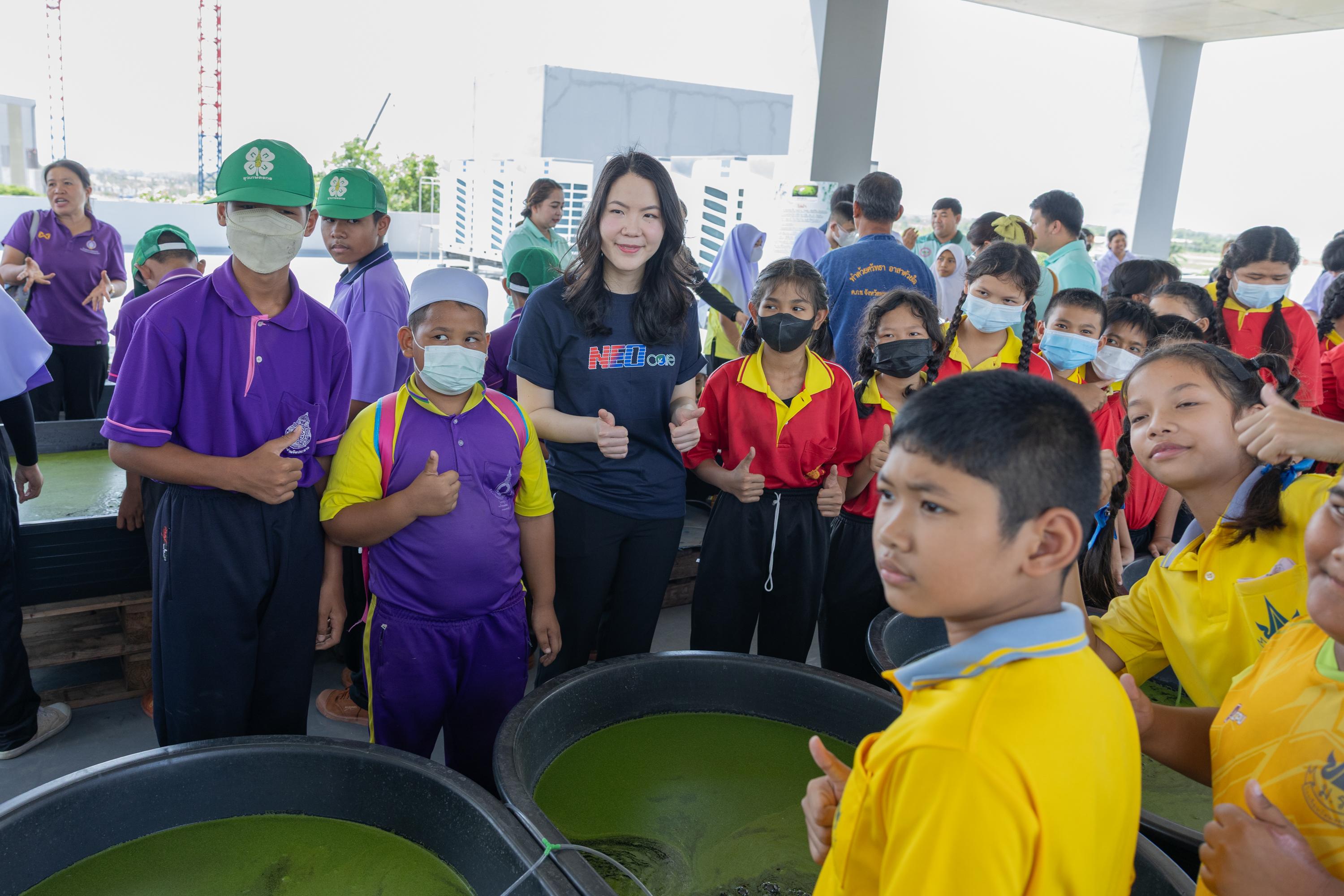
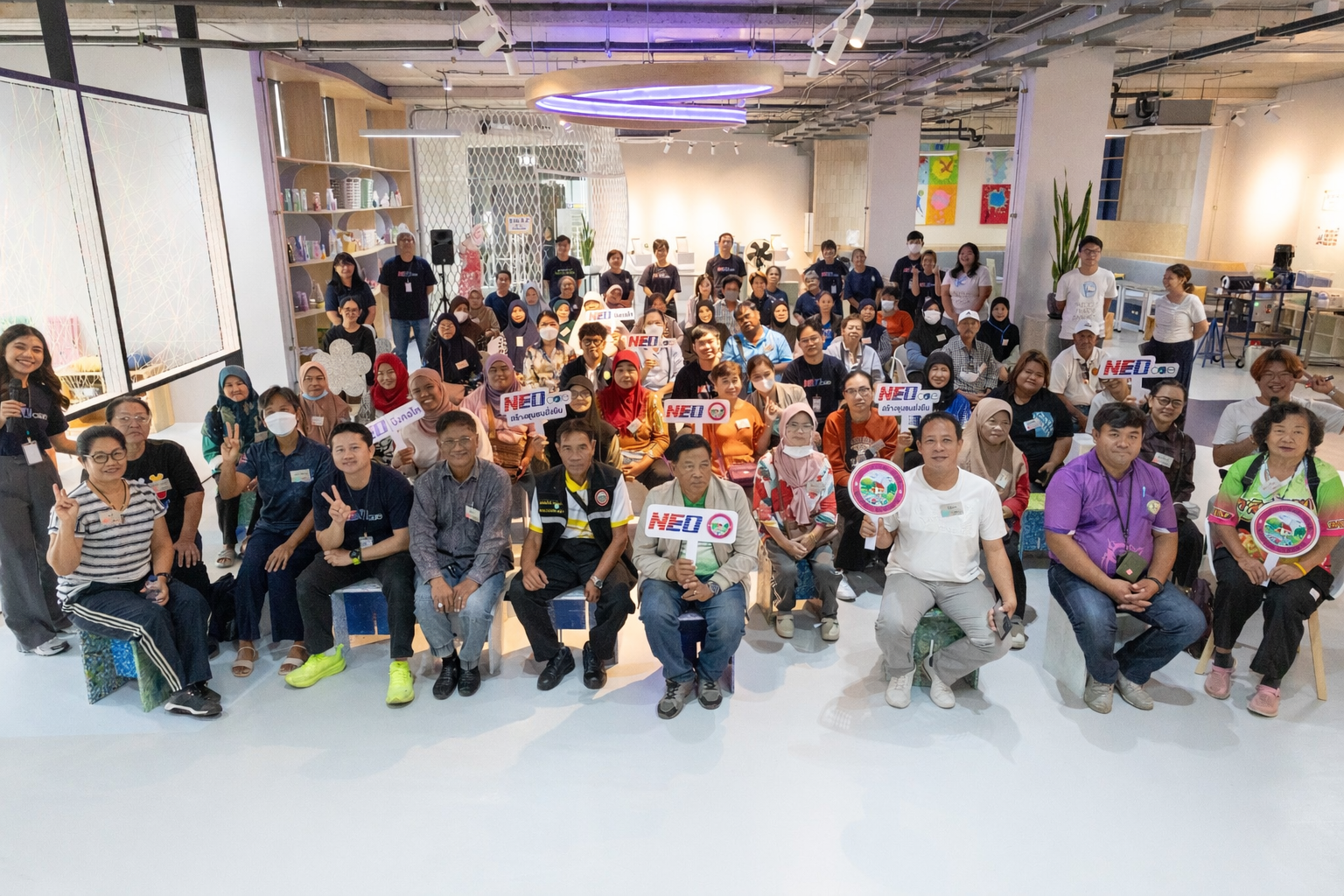
(3) Community Engagement and Environmental Stewardship
The Company conducts field visits to listen to community feedback and organizes meetings with communities on a continuous basis in order to incorporate suggestions into the development and improvement of operations. The Company also promotes environmental stewardship by providing knowledge on waste segregation, distributing containers for sorting bottle waste, and collecting bottles for recycling in order to support the circular economy concept at the community level.
In parallel, the Company promotes the local economy through the employment of local residents by coordinating with local government agencies, such as Subdistrict Administrative Organizations (SAO), as well as supporting the sale of community OTOP products and employing local residents to prepare food in the Company’s canteen and to work in the Company’s security services, in order to distribute income and create economic opportunities in an inclusive manner.
(4) Alignment with the Sustainable Development Goals (SDGs)
The Company recognizes the role of the business sector in supporting sustainable development. Therefore, the Company has adopted the United Nations Sustainable Development Goals (SDGs) as a framework for business operations and social initiatives, focusing on goals that are aligned with the business context and where the organization can create tangible value. These include SDG 1: No Poverty, SDG 2: Zero Hunger, SDG 4: Quality Education, SDG 8: Decent Work and Economic Growth, SDG 11: Sustainable Cities and Communities, SDG 12: Responsible Consumption and Production, SDG 15: Life on Land, and SDG 17: Partnerships for the Goals.
Plan Document Link
https://investor.neo-corporate.com/storage/download/code-of-ethic/20240328-CSR-policy-en.pdf
Plan Areas
| Plan Area |
|---|
| Employment and professional skill development |
| Education |
| Forests and natural resources |
Community & Social — Targets
Has Set Community & Social Targets
Yes
Targets
| Indicator | Target Areas | Target Year | Target Year — Description |
|---|---|---|---|
| Expanding beekeeping in schools | 3045 · Other name: Delivering trees and expanding beekeeping in schools · Description: Others | 2,026 | More than 15 beehives |
| Increase the number of plastic bottles collected from temples and schools. | 3039 · Description: Forests and natural resources · 3045 · Other name: Zero Waste School: Purchase plastic bottles from schools to be used for producing recycled product b · Description: Others | 2,026 | Increase the amount of plastic bottles exchanged for laundry detergent and fabric softener from temples and schools to more than 1,000 kilograms. |
| Provision of knowledge on waste segregation, the use of Wolffia as a learning medium in agriculture and alternative food, including processing into Wolffia chocolate, salted eggs, and fruit jelly, to schools. | 3037 · Description: Education · 3045 · Other name: Provision of educational knowledge to schools. · Description: Others | 2,026 | Provide educational support to 9 schools. |
Community & Social — Performance & Outcomes
Has Performance Results
Yes
Performance Description
(1) Local Impact & Key Indicators
Employment of Local Residents in Pathum Thani Province: 273 persons
OTOP Entrepreneurs Participating: 3 entities
Local Shops/Groups Providing Food in the Company’s Canteen: 4 entities
Volume of Bottles Collected for Recycling: 1,200 kilograms/year
Community Meetings / Community Feedback Sessions: 1 time/year
Knowledge Support to Student: 8 Schools
(2) Awards and Recognition in Social Responsibility
The Company received the CSR-DIW Continuous Award, which is granted to industrial factories that have continuously applied the CSR-DIW standard in their operations. The award is considered based on performance demonstrating consistent implementation of corporate social responsibility activities and tangible continuation and development of CSR-DIW activities previously undertaken.
CSR-DIW (Corporate Social Responsibility – Department of Industrial Works) is a guideline and standard for responsible business operations for industrial factories, developed by the Department of Industrial Works under the Ministry of Industry of Thailand. The objective is to encourage factories to operate with consideration for the environment, safety, surrounding communities, and stakeholders, with the key concept that “factories and communities can coexist sustainably.”
Other Social Management
Plan & Outcomes — Description
Personal Data Protection and Customer Confidentiality
The Company places the highest importance on personal data protection and the confidentiality of customer information. The Company has established a Privacy Policy as a guideline for the collection, use, disclosure, and retention of customers’ personal data in an appropriate and transparent manner and in compliance with relevant laws, particularly the Personal Data Protection Act (PDPA). The policy is publicly available for stakeholders through the Company’s website at https://neo-corporate.com/privacy-policy/.
The Company has established measures and processes for systematic personal data management, covering access control, secure data storage, the use of data in accordance with specified purposes, and controls to prevent the disclosure of data to external parties without authorization. In addition, the Company has provided a Whistleblowing Channel for cases involving actions that may be related to personal data violations or improper use of customer data. Stakeholders can submit complaints through the designated channel at https://investor.neo-corporate.com/th/governance/whistleblowing-channel-form.
In 2025, the Company did not encounter any cases or incidents of complaints related to violations of customers’ personal data.
Law Violation Incidents
Law Violation Incidents
| Metric | Current Year | Previous Year | Two Years Ago |
|---|---|---|---|
| The total number of cases or incidents of significant violations of laws or regulations regarding social and human rights (Cases) | 0 | 0 | 0 |
| The total number of cases or incidents that cause significant labor disputes (Cases) | 0 | 0 | 0 |
| The total number of cases or complaints related to consumer rights violations (Cases) | 0 | 0 | 0 |
| The total number of cases or complaints related to partner rights violations (Cases) | 0 | 0 | 0 |
| The total number of cases or incidents that cause disputes with the community/society (Cases) | 0 | 0 | 0 |
| The total number of cases or incidents related to cyber security or customer data breaches (Cases) | 0 | 0 | 0 |
| The total number of cases or incidents related to safety and occupational health at work (Cases) | 0 | 0 | 0 |